


Sugar Doesn't Cause Cavities — But This Does
Think sugar causes cavities? Not quite. The real culprit is a bacteria called Streptococcus mutans. Learn what actually causes tooth decay and how to stop it.
3/19/20264 min read
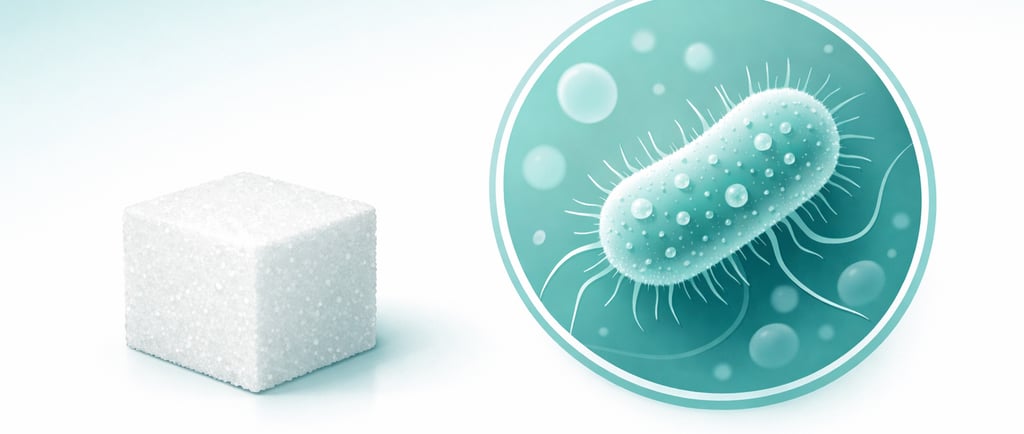
You've been told your whole life that sugar rots your teeth. And while sugar does play a role, it's not actually the one doing the damage. The true cause of cavities is a bacteria, and understanding that changes everything about how you protect your smile.
Key Takeaways
Cavities are caused by a bacteria calledStreptococcus mutans, not sugar itself
Sugar feeds the bacteria, which then produces acid that destroys tooth enamel
Starchy foods (bread, pasta, crisps) also fuel cavity-causing bacteria
The bacteria can be passed between people through saliva
Fluoride, good brushing habits and regular check-ups are your best defence
So, What Actually Causes Cavities?
Let's settle this once and for all. Cavities — also called dental caries or tooth decay — are an infectious disease caused by bacteria. Specifically, the main offender is a bacteria called Streptococcus mutans. It lives in your mouth, it feeds on the carbohydrates you eat, and it produces acid as a waste product. That acid is what gradually eats through your tooth enamel, creating the holes we call cavities.
Sugar didn't make that hole. Acid did. And acid came from bacteria. Sugar just invited the bacteria to the party — and brought the snacks.
The Science in Plain English Bacteria in your mouth convert sugars and starches into lactic acid. That acid lowers the pH in your mouth to below 5.5 — the point at which enamel starts to dissolve. Repeat this enough times, and you get a cavity.
How the Process Actually Works
Understanding tooth decay as a bacterial process — not just a dietary one — means we can fight it much more intelligently. Here's what happens step by step:
Step 1 — Bacteria colonise your mouth Streptococcus mutans and other acid-producing bacteria live in the plaque that forms on your teeth. Everyone has some level of these bacteria — it's completely normal.
Step 2 — You eat sugar or starchy carbohydrates The bacteria feast on fermentable carbohydrates — sugars, yes, but also bread, crackers, pasta, rice, and even fruit.
Step 3 — Acid is produced within seconds In as little as 20 seconds after eating, bacteria begin producing lactic acid. Your mouth's pH drops sharply.
Step 4 — Enamel starts to demineralise Below pH 5.5, minerals leach out of your enamel. Your saliva works to neutralise the acid and remineralise the tooth — but if acid attacks happen too frequently, it can't keep up.
Step 5 — A cavity forms Over time, repeated acid attacks create a permanent hole in the enamel. That's a cavity — and once it's there, only a dentist can fix it.
Why Sugar Gets All the Blame For Cavities
Sugar has been the face of tooth decay since the mid-20th century, and it's not entirely undeserved. Refined sugar is the bacteria's favourite food. The more sugar you eat — and the more frequently you eat it — the more fuel S. mutans has to produce acid and cause damage.
Sticky sweets are particularly harmful because they cling to teeth and keep feeding bacteria for longer. Sugary drinks are another major culprit — sipping on fizzy drinks or fruit juice throughout the day is like giving the bacteria a constant drip-feed.
But here's what surprises many people: a plain cracker or a slice of white bread can be just as problematic as a biscuit. Starchy carbohydrates break down into simple sugars in the mouth almost immediately, giving those bacteria exactly what they want.
Worth Knowing It's not just how much sugar you eat — it's how often. Snacking frequently throughout the day keeps your mouth in a constant state of acid attack. Three meals with no snacking is far better for your teeth than constant grazing.
Things That Increase Your Risk of Cavities
Some people seem to get cavities no matter how well they brush, while others eat chocolate daily and seem fine. That's because cavity risk is influenced by several factors beyond diet:
High levels of S. mutans bacteria
Frequent sugar or acid exposure
Dry mouth (low saliva flow)
Deep grooves in molar teeth
Genetics and enamel quality
Mouth breathing at night
Medications that reduce saliva
Infrequent or poor brushing
Wait... Can Cavities Be Contagious?
This is the part that tends to raise eyebrows. Because cavities are caused by bacteria, and bacteria can be transmitted through saliva, tooth decay is technically an infectious disease. You can pass cavity-causing bacteria to someone else.
This most commonly happens between parents and young children — sharing a spoon, blowing on food to cool it, or kissing. It's not something to panic about, but it is a good reason to take your own oral health seriously, especially if you have young children.
How to Actually Prevent Cavities
Now that you know the real enemy, you can fight it properly. Cavity prevention isn't just about avoiding sweets — it's about controlling the bacterial environment in your mouth.
🪥 Brush twice daily with fluoride toothpaste Fluoride strengthens enamel and actively disrupts the acid-producing cycle of bacteria. It's your single most effective daily defence.
🧵 Floss every day Bacteria love the gaps between teeth that your brush can't reach. Flossing removes the plaque they hide in.
💧 Stay hydrated and chew sugar-free gum Saliva is your mouth's natural defence system. It neutralises acid and remineralises enamel. Drinking water and chewing xylitol gum both stimulate saliva flow.
🍭 Reduce snacking frequency, not just sugar quantity Every time you eat, your mouth enters an acid attack phase. Fewer eating occasions = fewer attacks = fewer cavities.
🦷 See your dentist regularly Professional cleaning removes built-up plaque that brushing misses, and early-stage cavities can be caught and treated before they become serious.
Ready to protect your smile?
Book a check-up at Clínica Dental Raíces. We'll assess your cavity risk, give your teeth a professional clean, and put a prevention plan in place... all in one visit.
Frequently Asked Questions About Cavities
What actually causes cavities? Cavities are caused by a bacteria called Streptococcus mutans. This bacteria feeds on sugars and carbohydrates and produces acid as a by-product. That acid gradually dissolves tooth enamel, creating a cavity.
Does sugar cause cavities? Not directly — but it's a major contributor. Sugar feeds the bacteria that produce enamel-eroding acid. The more sugar you consume, and the more often, the more fuel the bacteria have to work with.
Can you get cavities even if you don't eat much sugar? Yes. Cavity-causing bacteria also feed on starchy carbohydrates like bread, pasta, and crackers. Dry mouth, poor brushing habits, and genetics can all contribute to cavities regardless of sugar intake.
Is tooth decay contagious? In a sense, yes. Streptococcus mutans can be transmitted through saliva — for example, by sharing utensils or kissing. Parents can pass the bacteria to young children, which is one reason good parental dental health matters.
How can I reduce the bacteria that cause cavities? You can't fully eliminate the bacteria, but you can control them. Brushing with fluoride toothpaste, flossing, using antibacterial mouthwash, staying hydrated, and attending regular dental check-ups all help keep cavity-causing bacteria in check.
Redes Sociales
Business hours
Contact
info@clinicadentalraices.es
© 2024. All rights reserved.
Monday 11:00 - 19:00
Tuesday 11:00 - 15:00
Wednesday 9:00 - 19:00
Thursday 9:00 - 19:00
Friday 11:00 - 15:00
Saturday 10:00 - 14:00 (Bookings)
Sunday Closed
+34 642301437 / +34 822643816